digitechné

design | rhetoric | technology

undermining risk in technical communication

...
A tailings pond impounds acid mine drainage outside of Silverton, Colorado, following the Gold King Mine Spill (USGS, 2015).

Undermining risk in technical communication: Extractive industry, cascading disaster, and the global climate crisis is a collaboratively authored monograph, forthcoming with the SUNY Press Series in Technical Communication in June 2026. My co-authors, Ehren H. Pflugfelder (Oregon State University), Daniel P. Richards (Old Dominion University), Donnie Johnson Sackey (University of Texas), and I offer a historiography of risk in technical communication, identifying limitations in the spatial- and temporal-frames present within studies of risk in the field. Building on Angela M. Haas and Erin A. Clark's (2017) work, we sketch an original methodology for considering cascading diasters such as the global climate crisis. Thereafter, we apply the methodology to construct three case studies of the climate crisis in the Colorado River Basin watershed. The first case study examines the temporal relationships between U.S. colonial aspirations, Westward expansion, and the Gold King Mine spill, which impacted the Animas River. The second case study looks at the spatial relationships that contributed to the Law of the River, which has provided the legal and physical infrastructure for re-distributing water Colorado River across the American West. The final case study considers the flux and flow of risk across space and time in relation to the proposed Uintah Bain Railway project that seeks to move shale-oil through the Colorado River Basin. We close the project dialogically reflecting on the implications of this project.


nsf ascend engine in colorado and wyoming
...
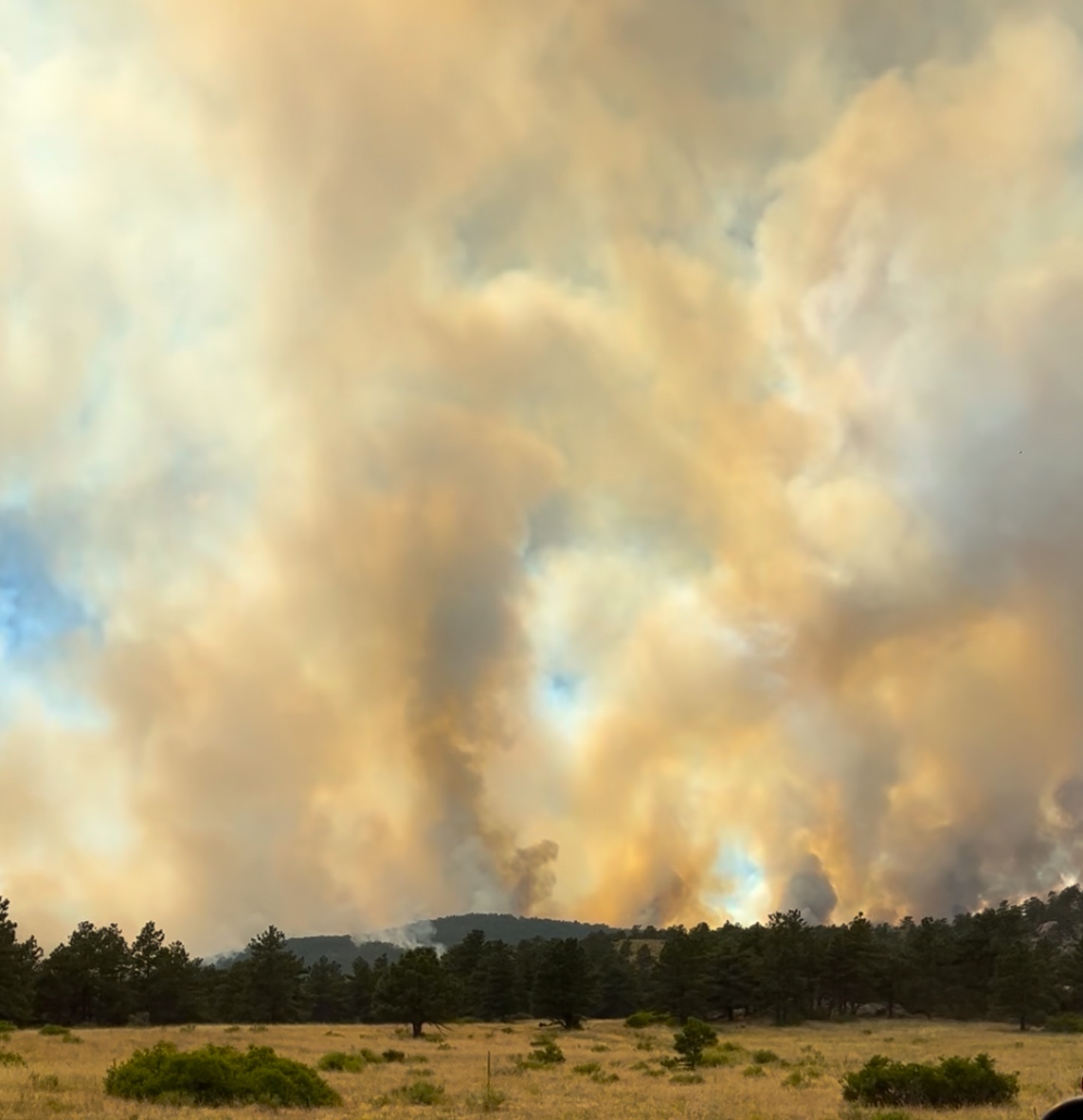
The Alexander Mountain Fire burns in the foothills of the Colorado Front Range outside of Loveland, Colorado (Amidon, 2024).

In 2022, I was selected for the 2022-2023 cohort of the Leadership Fellows Program at Colorado State University (CSU) and assigned to work in the Office of the Vice President for Research on strategic scientific and medical communication initiatives. One flagship project from this fellowship included partnering with leaders from government, research, education, industry, economic development, tribal government, and venture capitalism to co-create a successful vision for the National Science Foundation's Regional Innovation Engines (RIE) program. The RIE proposal was a particularly exciting project to work on, as this program is designed to respond to societal grand-challenges through community-driven, use-inspired, convergent research. Drawing from my expertise in technical and scientific communication, I worked alongside of Dinaida Egan, the Director of Research Acceleration at CSU, providing strategy, building cohesive cross-sector teams with partners spanning industry, academia, and government, leveraging project management skills, and extending targeted grant writing expertise. Alongside of institutional leaders from CSU, University of Colorado, University of Wyoming, and Colorado School of Mines, our team advanced a successful $160-million proposal to accelerate the development of climate resilience technologies in Colorado and Wyoming. This applied work seeks to respond to climate crises such as aridification, wildfire, and drought increasingly threatening the region. The resulting RIE, Advanced Sensing and Computation for Environmental Decision-making (ASCEND), now functions as a "strategic testbed for high-impact, technology-driven adaptation strategies...harnessing advanced sensing, AI-driven analytics, and data-informed decision-making" (ASCEND, 2025).


smart firefighting and physiological wearables
...
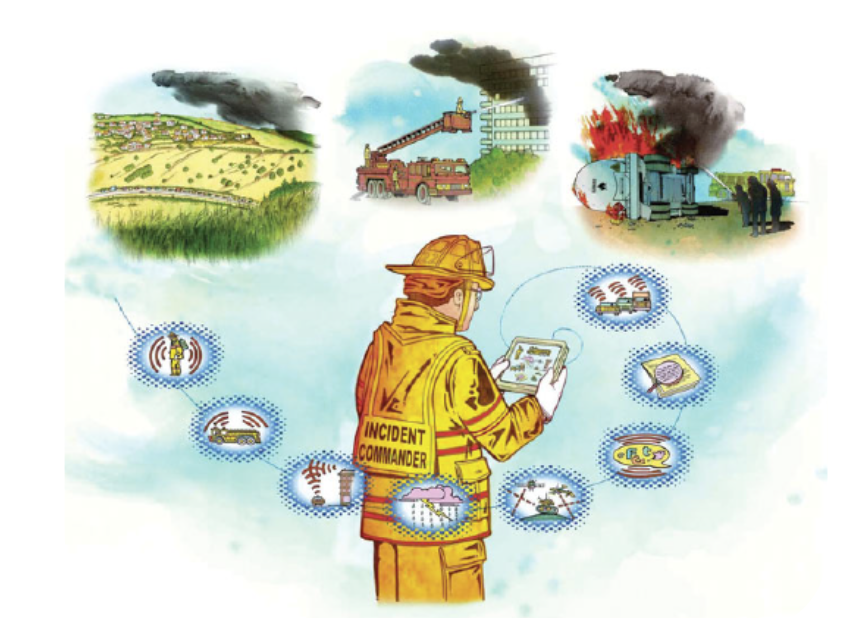
This National Institute for Standards and Technology (NIST) graphic envisions a future state of smart firefighting, wherein an Incident Commander receives real-time data and information from emergency scenes (Grant et al., 2015).

Throughout my career as a researcher, I've had the opportunity to work on a number of applied projects funded by the National Institute for Occupational Safety and Health (NIOSH) and the NSF to advance smart- and wearable-technologies for use in fire and emergency services. For example, a team of interdisciplinary collaborators at CSU and I partnered with leaders from Poudre Fire Authority (Fort Collins, CO) to host a workshop that included representatives from international, national, state, and local fire service organizations to better understand the role of technology in responding to occupational safety and health challenges in the industry. Similarly, members of our research team conducted clinical and user-experience design research to adapt a physiological wearable platform for use within arduous fireground environments and participated in the Firefighter Physiological Monitoring Technology Summit in Washington, D.C. hosted by the National Fallen Firefighters Foundation and Dr. Denise Smith (Skidmore College). More recently, I partnered with representatives from the Larimer County Sheriff's Office and AlertWest to explore the feasibility of implementing a pilot of an artificial-intelligence (AI) wildfire detection platform in Northern Colorado that can provide early detection of fires. Within these projects, my primary focus is designing platforms that provide inclusive and equitable access to the data and information that flow these systems, while also considering how issues such a privacy, ownership, and openness impact their usability.


bio

...
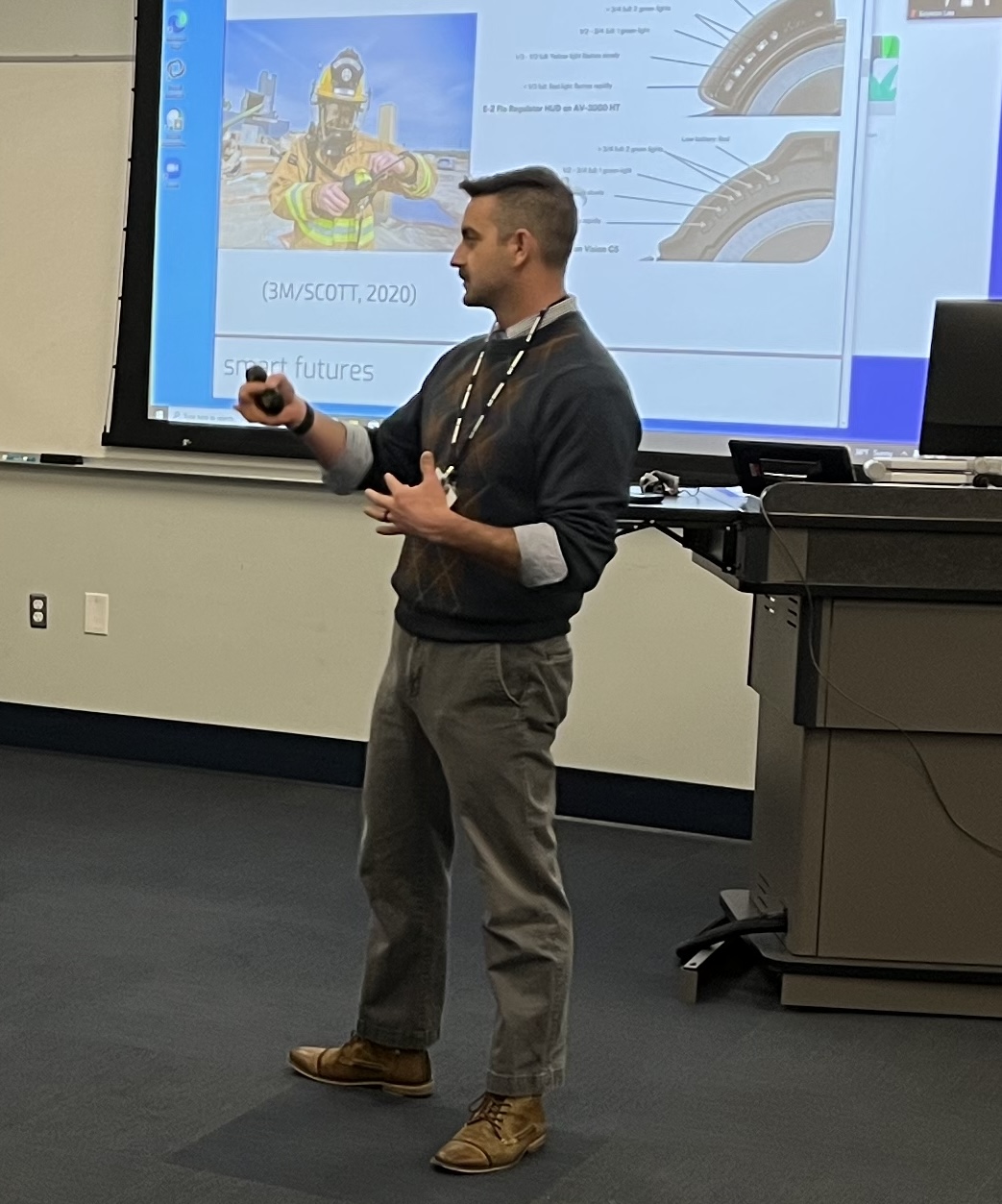
Here I am presenting research on data visualization the 11th Annual Symposium on Communicating Complex Information at Old Dominion University.
I am community-engaged and interdisciplinary scholar with a research program that spans the fields of technical and professional communication, writing and rhetoric studies, and public health. Broadly, I am interested in (a) risk, disaster, and crisis communication, (b) medical, scientific, and environmental rhetoric, (c) digital writing and literacy, and I adapt and develop theoretical, empirical, and applied approaches to study the design and practice of writing and communication through a socio-technical lens. Presently, I hold an appointment as Associate Professor and Chair of Professional and Public Writing, which is housed in the Harrington School of Communication at the University of Rhode Island. Previously, I have held appointments at Colorado State University, the Colorado School of Public Health, and the United States Coast Guard Academy. While at CSU, I served as Co-Director of WESTFIRE, an interdisciplinary center for wildfire and smoke research, a Leadership Fellow in the Office for the Vice President for Research, and other leadership roles within the University Writing Program. My scholarship has appeared in journals such as Technical Communication Quarterly, Kairos: A Journal of Rhetoric, Technology, and Pedagogy, Technical Communication, Journal of Business and Technical Communication, and Communication Design Quarterly. I am also currently serving a term as Editor-in-Chief of Communication Design Quarterly. In addition, I have nearly 25 years of experience in fire and emergency services, having served Windsor Severance Fire Rescue (CO), Wellington Fire Protection District (CO), Westerly Fire Department (RI), and the Rhode Island Fire Academy (RI) as a firefighter/EMT.


cv/pubs

special issues

Amidon, Timothy R., Moore, Kristen R., & Simmons, W. Michele. (Eds.). (2023). Community-engaged research in communication design. Communication Design Quarterly, 11(3). https://dl.acm.org/toc/sigdoc-cdq/2023/11/3

Amidon, Timothy R., Moore, Kristen R., & Simmons, W. Michele. (Eds.). (2023) Valuing and making visible the labor of coalitional practice: Redesigning genres and methodologies for justice-oriented communication design. Communication Design Quarterly, 11(2). https://dl.acm.org/toc/sigdoc-cdq/2023/11/2

conference proceedings

Amidon, Timothy R., Pflugfelder, Ehren H., & Richards, Daniel P. (Eds.). (2019). SIGDOC ‘19 Proceedings of the 37th ACM International Conference on the Design of Communication. ACM. https://dl.acm.org/doi/proceedings/10.1145/3328020

peer refereed articles

Moore, Kristen R., Amidon, Timothy R., & Simmons, W. Michele. (2023). Equity and inclusion as workplace practices: A four step process for moving to action. Technical Communication, 70(3), 7–27. https://doi.org/10.55177/tc710097

Pflugfelder, Ehren H., Amidon, Timothy R., Sackey, Donnie J., & Richards, Daniel P. (2023). Expanding the scope and scale of risk in Technical and Professional Communication. Water access and the Colorado River Basin. Technical Communication Quarterly, 32(3), 224–241. https://doi.org/10.1080/10572252.2023.2210194

Amidon, Timothy R., Nielsen, Alex C., Pflugfelder, Ehren H., Richards, Daniel P., & Stephens, Sonia H. (2021). Visual risk literacy in “Flatten the Curve” COVID-19 visualizations. Journal of Business and Technical Communication, 35(1), 101–109. https://doi.org/10.1177/1050651920963439

Amidon, Timothy R. (2020). Brightness behind the eyes: Rendering firefighters’ tacit literacies visible. Kairos: A Journal of Rhetoric, Technology, and Pedagogy, 25(1), Special issue on Data Viz in Writing Studies (Guest editors John Gallagher & Dànielle N. DeVoss). http://kairos.technorhetoric.net/25.1/inventio/amidon/index.html

Amidon, Timothy R., Hutchinson, Les, Herrington, Tyanna K., & Reyman, Jessica. (2019) Copyright, content, and control: Student authorship across educational technology platforms. Kairos: A Journal of Rhetoric, Technology, and Pedagogy, 24(1), Special Issue on Ownership, Authorship, and Copyright (Guest editors Tyanna K. Herrington, John Logie, & Karen Lunsford). http://kairos.technorhetoric.net/24.1/topoi/amidon-et-al/index.html

Amidon, Timothy R., Williams, Elizabeth, Lipsey, Tiffany, Callahan, Randy, Nuckols, Gary, & Rice, Spencer. (2017). Sensors and gizmos and data, oh my: Informating firefighters’ protective personal equipment. Communication Design Quarterly, 5(4), 15–30. https://par.nsf.gov/servlets/purl/10059804

*Amidon, Timothy R. (2016). (dis)Owning tech: Ensuring value and agency at the moment of interface. Hybrid Pedagogy: A Digital Journal of Learning, Teaching, and Technology. https://hybridpedagogy.org/disowning-tech-ensuring-value-agency-moment-interface/

*Article reprinted (2021). In Chris Friend (Ed.), Hybrid teaching: Pedagogy, people, and politics (133–142). Hybrid Pedagogy, Inc.

peer refereed proceeding articles and abstracts

Amidon, Timothy R., & Sackey, Donnie J. (2024). Justice in/and the design of AI risk detection technologies. In SIGDOC’24: Proceedings of the 42nd ACM International Conference on Design of Communication (pp. 81–93). ACM. https://dl.acm.org/doi/10.1145/3641237.3691656

Simmons, W. Michele, & Amidon, Timothy R. (2019). Negotiating research stance: An ecology of tensions in the design and practice of community-engaged research. In SIGDOC’19: Proceedings of the 37th ACM International Conference on Design of Communication (pp. 1–11). ACM.https://doi.org/10.1145/3328020.3353955

Amidon, Timothy R., & Lipsey, Tiffany. (2018). Blue-collars/tough designs: UX within fire service occupational safety and health programs. In M.A. Wang (Ed.) Design, User Experience, and Usability: Users Contexts and Case Studies (pp. 573-588). DUXU 2018. Lecture Notes in Computer Science, vol. 10920. Springer.https://link.springer.com/chapter/10.1007/978-3-319-91806-8_45

Amidon, Timothy R., Arduser, Lora, Gouge, Catherine, Hutchinson, Les, Jones, John., Jones, Natasha N., Kennedy, Krista, Lipsey, Tiffany, Moore, Kristen R., Novotny, Maria, & Welhausen, Candice A. (2017). Examining usability in the communication design of health wearables [Extended abstract]. In SIGDOC’17: Proceedings of the 35th Annual Conference on Design of Communication (pp. 1–3). ACM. https://doi.org/10.1145/3121113.3121226

Amidon, Timothy R., & Simmons, W. Michele. (2016). Negotiating “messy” research context and design through adaptive research stances: Experience report. In SIGDOC’16: Proceedings of the 34th Annual Conference on Design of Communication (pp. 1–6). ACM. https://doi.org/10.1145/2987592.2987622

peer refereed book chapters

Amidon, Timothy R. (2022). From postcards to PSAs: Activist soundwriting. In Michael J. Faris, Courtney S. Danforth, & Kyle D. Stedman (Eds.), Amplifying soundwriting pedagogies: Integrating sound into rhetoric and writing (209–222). WAC Clearinghouse/University Press of Colorado. https://wac.colostate.edu/docs/books/soundwriting/chapter16.pdf

Amidon, Timothy R. (2019). U can haz fair use! In John Gallagher & Dànielle N. DeVoss (Eds.), Explanation points! Publishing in rhetoric and composition (195–198). Utah State University Press/University Press of Colorado. https://upcolorado.com/utah-state-university-press/item/3701-explanation-points

Amidon, Timothy R., Stedman, Kyle D., & DeVoss, Dànielle N. (2017). Remix and unchill: Remaking pedagogies to support ethical fair use. In Renee Hobbs (Ed.), Routledge companion on media education, copyright, and fair use (65–80). Routledge. https://www.routledge.com/The-Routledge-Companion-to-Media-Education-Copyright-and-Fair-Use/

Amidon, Timothy R., & Reyman, Jessica. (2015). Authorship and ownership of user contributions on the social web. In Dànielle N. DeVoss & Martine Courant Rife (Eds.), Cultures of copyright (pp. 108–124). Peter Lang International Academic Publishers. https://www.peterlang.com/document/1109549

Amidon, Timothy R. (2011). Authoring academic agency: Charting the tensions between work-for-hire university copyright policies. In Martine Courant Rife, Sean Slatterly, & Dànielle N. DeVoss (Eds.), Copy(write): Intellectual property in the writing classroom (pp. 49–79). WAC Clearinghouse/Parlor Press. https://wac.colostate.edu/docs/books/copywrite/chapter3.pdf

blog

Caption goes here.
Blog Post Content....


photostream


Email


timothy_amidon@uri.edu

teaching